
Scars from surgery can be a constant, visual reminder of an illness conquered. Or they can be a glaring marker, signifying pain and suffering, that makes us feel exposed and vulnerable. It’s all in your attitude, and the way you care for those scars. How you feel about your scar dwells mainly within your attitude, but how you care for your scar following surgery will have much to do with how comfortable you become with the daily reminder of your illness. Because we are conscious of our outward appearance, and may feel awkward about our scars and how they set us apart from others, we want our scars to be less noticeable. That’s why this post will deal with how to fade a surgery scar.
The truth is anytime there’s a cut in the skin there’s a 100% chance of a scar forming. Even though surgeons try to be as careful as possible and minimize the scar, every surgery leaves a mark. And there are some factors that are within their control, and some that are not.
Factors That Affect Scarring
There are a few scarring factors that you and your surgeon cannot control:
Age. Older patients tend to have less prominent scars, which seems counterintuitive since it takes us longer to heal as we age. The scar for an older person is often flat and pale in contrast to incisions in very young people, which may heal faster but are more likely to be thick and pink.
Genetics People with a family history of poor scar formation may be at increased risk themselves. Keloid scars are an especially problematic type of scar that can run in families. Thick and pink, these scars extend beyond the boundaries of the original incision or injury. Keloid scars are very hard to treat. People with a family or personal history of keloid scar formation should put a lot of thought into whether they want to have cosmetic surgery.
Scar placement. Scars often can be hidden on the body in a natural line or fold. Sometimes, however, an incision has to be made in a more prominent location, For example, incisions on the breast bone, over major joints (knees, shoulders), and on the back can be prone to thick, wide scar formation in anyone — even people without a personal or family history of poor scar formation. – Surgical Scarring – Minimizing The Appearance of Scars
One of the most important things to remember following surgery is to keep the incision area clean. This will be the first step in making sure your scar heals well. A scar that heals quickly is less noticeable and will blend in with surrounding tissue easier than one that has become infected and raw. Make sure you follow your doctor’s recommendations on how best to keep the incision clean and healthy. How your scar ultimately will look depends a great deal on how well it heals.
When your incision has healed sufficiently, you need to start covering the scar with a cream or oil to moisturize the area and keep it hydrated. When choosing product, look for these things:
- Boosts cell turnover
- Hydrates the skin
- Vitamins to nourish the skin
- Reduces inflammation
One common myth has been that Vitamin E is necessary for healing scars. This hasn’t been backed up by science, so claims of scar healing from Vitamin E oil are just hype and marketing. Vitamin A, however, has been shown to have healing properties for scars, so making sure you are getting enough Vitamin A is a good strategy. You can get this through multivitamins, Vitamin A supplements, or making sure you are getting plenty of foods rich in Vitamin A (like sweet potatoes, spinach, carrots, broccoli, and red peppers) into your daily diet.
Here’s a short and simple article about proper wound care for scars from The American Academy of Dermatology: Proper Wound Care: How to minimize a scar
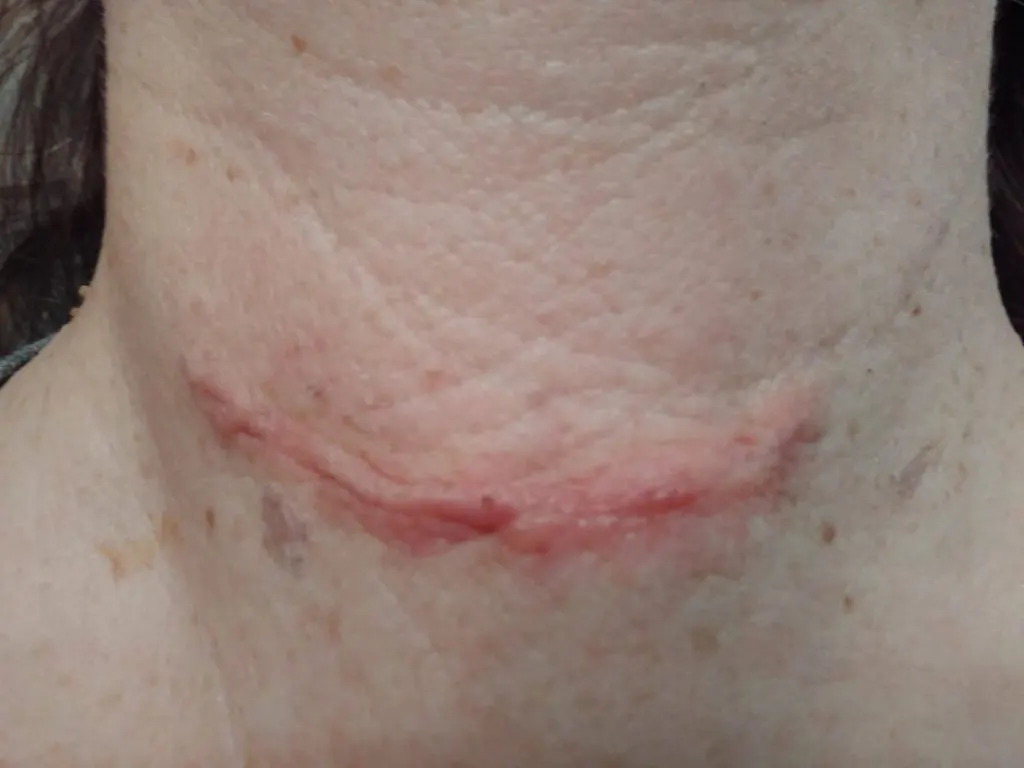
I began taking care of my scar right after surgery, and when my doctor said the incision has healed sufficiently. I use Arbonne products, and trust them to provide all the ingredients I would need to heal and fade the scar from my thyroid removal. Here is a photo of what my scar looked like two weeks after surgery.
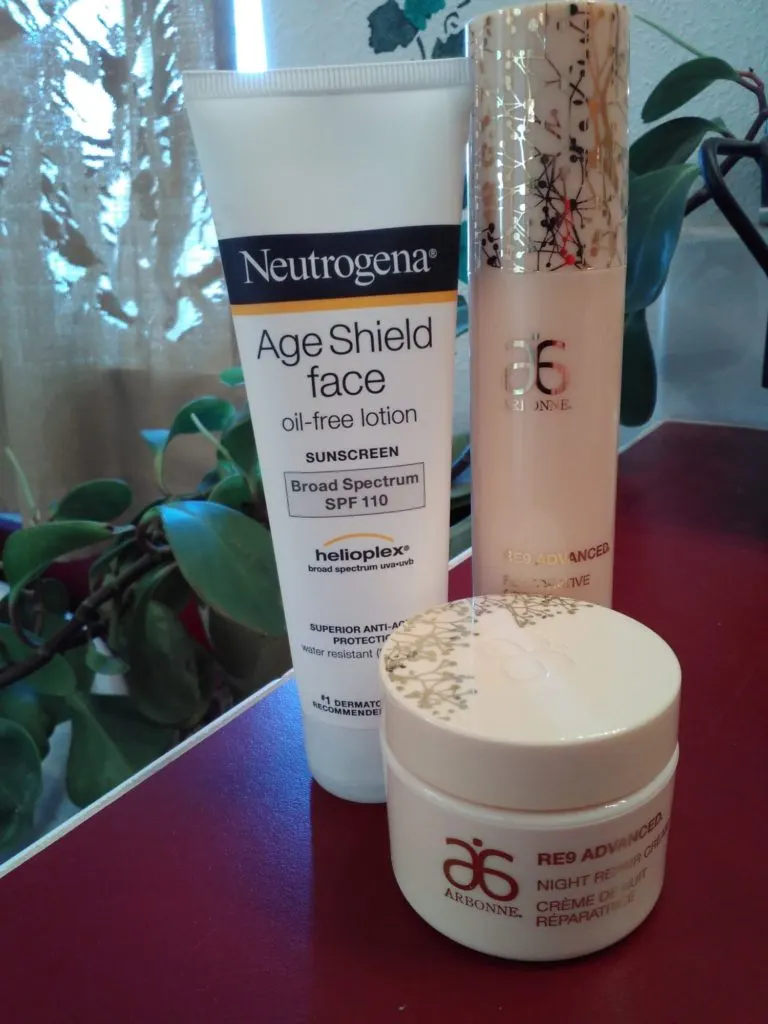
My routine consisted of using the Arbonne RE9 Advanced Anti-Aging system, and a good sunscreen. Sunscreen is very important in allowing the scar to fade faster and allowing for increased cell turnover. Your scar needs to be protected, so a strong (read: broad-spectrum and high SPF) sunscreen is vital, along with a hat or scarf if necessary.
Here’s what I used:
Here’s how my scar was doing one month later, 6 weeks post-surgery:
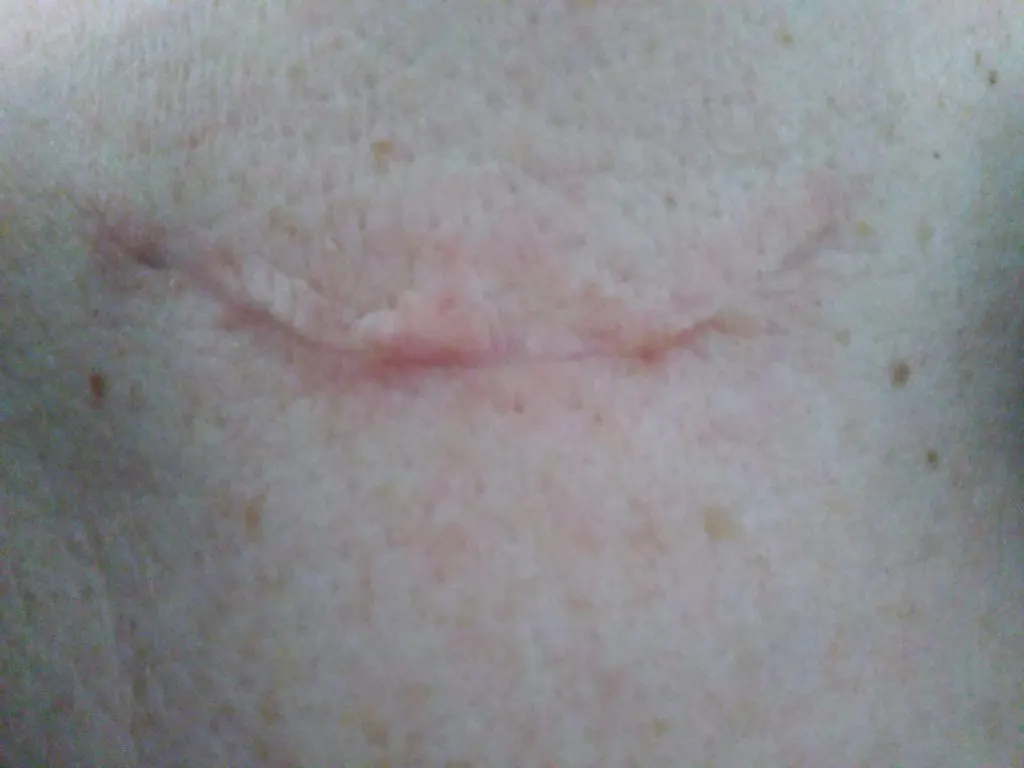
It takes some patience to fade a surgery scar. Time and good care go a long way towards minimizing the look for the scar, and lessening its appearance. Be patient, and keep slathering on the moisturizer and sunscreen! Your scar may not completely disappear, but it WILL fade in appearance and be less noticeable. Along with the topical products to care for the scar, it’s just important to maintain the healthy habits you’ve been told to cultivate anyway; getting proper sleep, eating healthy foods, plenty of water, etc. These also allow your body to work internally to heal, and will ultimately help to fade a surgery scar.
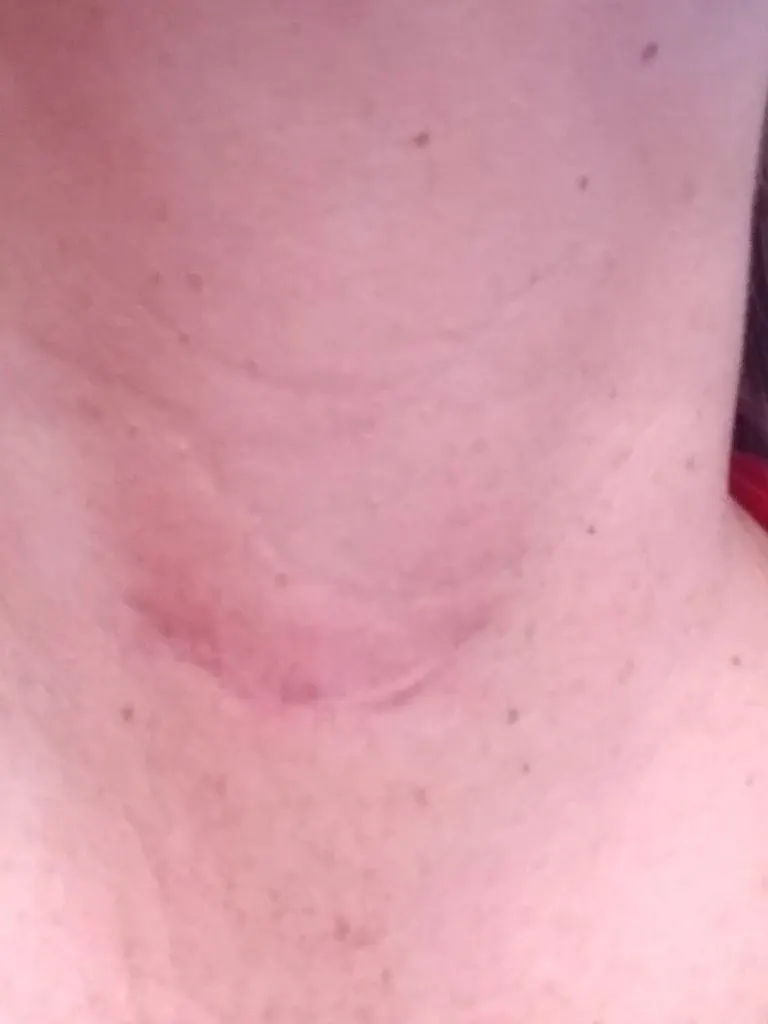
In addition to hydrating and protecting your scar with sunscreen, you can also rock your thyroid scar in other ways. Here’s a fun article/slideshow to check out: 10 Ways To Rock Your Thyroid Scar
The most helpful piece of advice is to protect from the sun, and be consistent. You need to apply your moisturizer and sunscreen faithfully to see the results you want, in order to fade a surgery scar.
And here are a couple other posts about Arbonne products that I find useful:
- RE9 Advanced Retexturing Serum in Lotion Review
- My Favorite Products – Arbonne Makeup Primer
- Products I Love – Arbonne Essentials Energy Fizz Sticks
- Arbonne Energy Chews
- Worthy or Worthless – Single Mom Struggles
- How To Build A Single Mom Resource Group
- 3 Keys To Teach Kids About Debt
- Criticall Exam Tips – How To Pass The Test
- Tithing As A Widow – Can You Afford It?
- Anxiety – Don’t Let It Control You!
- How To Save Money – Automate Your Savings!
- Cut Grocery Spending Down To Size
- How To Create A 72-Hour Bag
- Laundry Room Organization Hacks and Tips
- 7 Tips To Beat Seasonal Depression
- Heart Disease – Healthy Changes To Lower Your Risk
- Brown Sugar Pound Cake Recipe
- How God Blesses Broken Hearts – Dealing With Grief
Please share this article if you found it helpful. I’d love for other folks to be able to find it. Thanks!

Joan Merrell is a solo mom to two daughters, a widow, and a security technician at Oregon State Hospital. Oregon native, farm girl and 4H leader, maker of homemade bread and chocolate chip cookies, she balances (more or less) full-time work with caring for a home filled with a teenage daughter, 2 entitled cats, and a hyper German Shepherd. She enjoys gardening and hiking, reading Ted Dekker and Frank Peretti novels, and searches for a few spare minutes to communicate with her grown daughter and son-in-law on her Marco Polo app. Find out more about Joan here.